

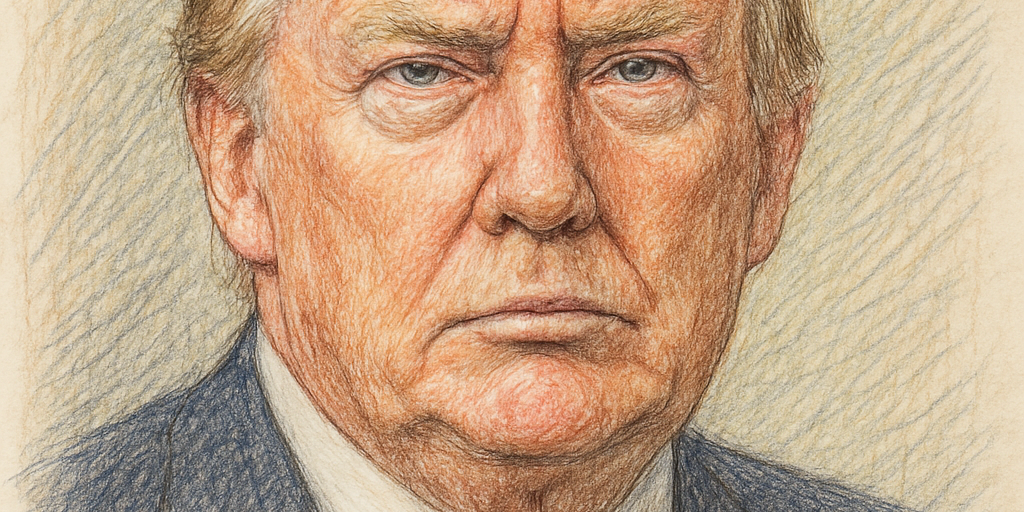
He didn’t win on unity. He won on outrage, identity, and irresistible offers. Let’s talk marketing.
Why Trump Is a Masterclass in Direct Response Marketing
Trump didn’t run campaigns — he ran emotionally charged funnels. Every message was engineered for response, not applause. He nailed headlines, framed villains, offered hope, and pushed urgency. From rallies to tweets, it was a crash course in attention-grabbing, action-driving, loyalty-building copywriting. Love him or hate him, the man knew how to move people — and that’s the core of great marketing.
Let’s get something straight: whether you love him, hate him, or just wish he’d stop tweeting for five minutes, Donald J. Trump is a walking, talking direct response machine.
He’s not a politician. He’s a brand. A movement. A story you can’t stop watching. And if you squint past the politics and focus on the psychology, you’ll see he ran his campaigns like a hype-fueled sales funnel—complete with headline hooks, enemy-based copy, emotional agitation, irresistible offers, and a fan base that would crawl over broken glass to buy what he’s selling.
Let’s be blunt: Trump didn’t win on unity. He won on outrage, identity, and repetition.
He understood what most marketers forget:
People don’t vote with facts. They vote with feelings.
Same goes for buying.
You could line up a hundred pages of policy plans from a traditional candidate, but none of that sticks. Meanwhile, Trump tosses out a three-word slogan—“Build the Wall”—and suddenly every conversation at Thanksgiving dinner turns into a tribal war.
Why? Because that slogan wasn’t just a policy. It was a promise, a pain point, and a call to arms — all wrapped in a punchy soundbite that fired straight into the reptilian brain.
That’s not accidental. That’s copywriting.
And let’s talk platforms for a second.
Trump didn’t wait for permission. He built his own megaphone with Twitter. He didn’t rely on journalists to cover him — he manufactured headlines daily. He controlled the message, stirred the pot, and when the media attacked? He spun it into more clicks, more shares, more loyalty.
Tell me that’s not traffic generation 101.
Even his rallies were basically webinars with hats. Think about it:
-
Emotional hook (the world is broken and it’s not your fault)
-
Enemy positioning (blame them: the swamp, the media, immigrants, whoever)
-
Big promise (Make America Great Again)
-
Clear CTA (vote Trump / buy the merch / rage-share this post)
Sound familiar? It’s the same anatomy as a high-converting sales letter.
This isn’t a political endorsement. This is a cold, hard look at the reality:
Donald Trump used direct response tactics better than most marketers do.
And he won a presidency — twice — because of it.
You don’t have to like the man to learn from the method.
So let’s break down the playbook.
If You Can Polarize, You Can Monetize
Trump didn’t just build a base — he forged a tribe. How? By creating a common enemy. In copywriting, the “villain” is a powerful tool. Trump used it masterfully: the media, elites, immigrants — all became narrative foils. When your offer solves a problem caused by a clear enemy, your message hits harder, deeper, and more personally. Enemies unify. Villains sell.
Neutrality is invisible.
In politics, in business, in marketing — “meh” doesn’t move the needle.
Donald Trump didn’t tiptoe around issues to appeal to everyone. He planted a flag and said, “You’re either with me or you’re part of the problem.” That’s not political strategy — that’s tribe creation 101.
Polarization is the gasoline of attention.
When you split the crowd, something magical happens:
-
The people who hate you talk about you nonstop.
-
The people who love you? They defend you even harder.
That’s engagement on both sides. And in the online world, attention is currency — and controversy pays like crazy.
Let’s bring it back to marketing.
When Trump said, “Build the Wall,” it wasn’t just about immigration. It was a psychological line in the sand. A symbol. An emotional shorthand for “we take care of our own” — versus “they’re taking what’s ours.” That message didn’t just resonate. It echoed.
You couldn’t ignore it.
And that’s the point.
Most brands are scared to offend. They water everything down to appeal to the masses.
But in doing so, they become forgettable.
Trump didn’t care about being liked by everyone — he cared about being remembered by his base and feared by his enemies. That’s power. That’s positioning.
Let’s translate that to direct response:
-
Apple vs. PC.
-
CrossFit vs. Couch Potatoes.
-
ClickFunnels vs. “bro marketers.”
Great marketing often defines itself by what it’s against.
Trump did this relentlessly — “the swamp,” “fake news,” “globalists,” “liberal elites.”
He sold the identity of the outsider — the guy who wasn’t part of the corrupt system. And in doing so, he created a magnetic loyalty loop that no scandal could shake.
Your business needs that kind of emotional clarity.
So ask yourself:
-
What are you FOR?
-
What are you AGAINST?
-
Who are you NOT for?
Because the moment you start taking a stand, you stop sounding like everyone else.
You become a signal instead of noise. A leader instead of another talking head.
Trump didn’t win because he was nice. He won because he was clear.
And in marketing, clarity wins conversions. Every. Damn. Time.
Sell to the Gut, Not to the Brain
People didn’t vote for Trump — they joined him. His messaging wasn’t just political; it was tribal. He gave disillusioned Americans an identity: the forgotten, the fighters, the “real ones.” In marketing, this is brand DNA gold. If your offer lets someone say, “This is who I am now,” you win their wallet — and their loyalty. Sell transformation, not just transactions.
If you’re still trying to logic people into buying — stop. You’re playing checkers in a chess game.
Trump didn’t win people over with white papers and policy PDFs. He didn’t lead with facts. He punched the gut and owned the moment.
Here’s the truth most marketers and politicians are afraid to say out loud:
Feelings sell. Facts stall.
Want proof? Let’s go back to 2016.
While his opponents were quoting statistics and citing policy plans, Trump was telling middle America:
“They’re laughing at you.”
“They’ve taken your jobs.”
“The system is rigged.”
“I’ll fight for YOU.”
Is it nuanced? No.
Is it emotionally charged, clear, and primal? Hell yes.
And that’s the game.
He didn’t appeal to the analytical prefrontal cortex. He went straight to the amygdala — the fear center of the brain. The survival zone. The place where fight-or-flight decisions live.
In other words: he sold to the gut.
Let’s zoom out and apply this to your funnel:
-
People don’t buy coaching because they “want to improve.”
They buy because they’re afraid they’ll fail without it. -
They don’t buy a lead magnet because they “value education.”
They download it because they’re sick of spinning their wheels.
Trump spoke to that part of people — the part that was scared, tired, angry, and ignored. And then he gave them a message that made them feel seen.
That’s copywriting at its most primal:
-
Agitate the pain.
-
Stoke the emotion.
-
Position your offer as relief.
This is why so many VSLs, sales pages, and emails fall flat — they talk like robots trying to win a debate. Trump never debated. He dominated. Because he understood that most people don’t act from reason… they act from raw emotion.
And if you don’t believe that, ask any voter who pulled the lever for him — not because they liked everything he said, but because they felt like he was on their side.
That’s identity-based messaging. And it works.
As a marketer, your job isn’t just to describe features or benefits. It’s to create a visceral reaction so your audience says, “Finally. Someone gets it.”
When you make someone feel something, you become unforgettable.
When you just make them think something, they’ll forget you by lunch.
So: stop selling to the spreadsheet.
Start selling to the story people tell themselves at night.
Create a Villain Worth Fighting
Trump speaks at a fourth-grade level. Critics laughed, voters listened. In a world drowning in complexity, clarity converts. Whether it was “Build the Wall” or “Drain the Swamp,” his slogans stuck because they were simple, emotional, and repeatable. In copywriting, you’re not rewarded for clever — you’re rewarded for clear. Say it plain. Say it bold. Say it so a fifth grader nods.
If your marketing doesn’t have a bad guy, you’re not telling a story — you’re giving a lecture.
Trump understood something most marketers miss: people don’t just want a solution… they want someone to blame.
It’s deep-rooted psychology. Every great narrative has a villain:
-
Luke had Darth Vader.
-
Katniss had the Capitol.
-
Your audience has… what, exactly?
Your offer is the sword. The villain is the dragon.
Without a dragon, no one needs the sword.
Now, Trump didn’t just point fingers — he sculpted enemies with surgical precision:
-
“Fake News” wasn’t just a jab at CNN — it was a full-frontal assault on the credibility of every outlet that didn’t support his narrative.
-
“The Swamp” wasn’t a single person — it was a shapeshifting, shadowy blob of corruption he could invoke anytime he needed to rally the troops.
-
“They” were always out to get you — and Trump was always there to protect you.
This is enemy-based marketing, and it’s insanely effective.
Why?
Because humans are tribal. We’re wired to categorize: us vs. them, safe vs. dangerous, right vs. wrong. And when you create a clear external enemy, your audience doesn’t just see you as a brand — they see you as a leader.
And leaders? They don’t get ignored.
Let’s talk application.
In your business:
-
Maybe the villain is “cookie-cutter courses” that keep your audience stuck.
-
Maybe it’s “bro marketers” selling empty hype.
-
Maybe it’s overwhelm, burnout, or gatekeeping gurus.
The key is to define it clearly and paint it in high contrast. Make it frustrating. Make it universal. Make your audience feel like it’s been holding them back for years — and you’re the one finally calling it out.
Here’s the bonus: when you position a villain, you create loyalty without asking for it.
Your people rally behind you, not just because they love you — but because you’re fighting the fight they wish they could.
“If you’re not angry, you’re not paying attention.”
That’s not just a protest sign — it’s a funnel headline.
Trump used it masterfully.
And whether you agree with his villains or not, his people felt them. That’s the point.
So ask yourself:
-
Who’s the enemy in your market?
-
What monster are you helping your audience slay?
Because when you give people a villain worth fighting, they don’t just follow you — they join your cause.
Repetition, Repetition, Repetition – The Power of Unforgettable Messaging
Trump repeated his messages until they became gospel. “Fake news,” “Witch hunt,” “Make America Great Again” — all drilled into the national brain. Repetition isn’t annoying when it’s strategic — it’s branding. In marketing, if your message isn’t being repeated like a broken record, it’s being ignored. Say it. Say it again. And when you’re tired of hearing it? Say it louder.
ou can say it once and hope they remember it… or you can say it a hundred times and make it impossible to forget.
Trump didn’t just use repetition — he weaponized it.
“Build the Wall.”
“Make America Great Again.”
“Fake News.”
“Witch Hunt.”
“Sleepy Joe.”
You heard those phrases so many times, they drilled straight past your conscious mind and took up residence in your subconscious — rent free.
This is not sloppy.
This is not lazy.
This is neuro-linguistic dominance.
Smart marketers get bored of their own message too fast. They tinker, they rewrite, they “freshen things up” — while their audience is still trying to figure out what the hell they even do.
Not Trump.
He picked a message — and hammered it home until it echoed in every news cycle, social feed, dinner table, and late-night comedy monologue.
Love him or loathe him, you remembered the message.
In direct response, this is gospel:
-
People don’t act when they understand. They act when they remember.
-
And people don’t remember until they’ve seen or heard it 7, 12, 20 times.
This is why your lead magnet needs the same CTA on every page.
Why your email signature should always have your core hook.
Why your social captions should echo your headline again and again.
Because when repetition becomes rhythm, your message becomes music.
Let’s look at how this works practically:
-
Your brand promise? Repeat it.
-
Your “big idea”? Say it. Then say it again.
-
That customer transformation story? Don’t bury it in one blog post — make it a case study, an email, a reel, a tweet thread, a story highlight.
Repetition builds trust and certainty.
If you sound like a broken record — great. That’s when you know it’s finally sinking in.
The brain craves pattern.
The heart responds to familiarity.
The wallet opens when both are aligned.
Trump knew that. And while others tried to be clever, he focused on being clear and consistent. That’s why his slogans lived longer than most marketing campaigns.
So, marketer — coach — entrepreneur:
-
Pick your core message.
-
Test it.
-
Then repeat it until they’re repeating it back to you.
That’s when you know it’s working.
Because if you don’t brand your idea in their minds, someone else will.
Identity First, Logic Later – Selling Belonging Over Benefits
Trump’s rallies weren’t about policies. They were emotional concerts of identity and loyalty. People came to belong, not just to hear. That’s the power of community in marketing. Build an audience that sees your brand as a movement, not a product, and they’ll promote it, defend it, and buy from you without hesitation. Connection converts. And real connection comes from shared emotion.
rump didn’t just run for office — he sold an identity. And millions bought it.
He wasn’t pitching policy. He was pitching a feeling. A tribe. A flag to rally under.
“You’re not just voting for me. You’re voting for you — the version of you that’s been ignored, silenced, screwed over… and finally has a voice again.”
That’s identity-based marketing in its purest form.
And it’s where most marketers drop the ball.
They list features. They explain benefits. They sell stuff.
But what people really buy?
A version of themselves they want to believe in.
Let’s break this down like a copywriter.
When someone buys:
-
A luxury watch, they’re not buying time — they’re buying status.
-
A fitness coaching package, they’re not buying macros — they’re buying self-respect.
-
A course on affiliate marketing, they’re not buying videos — they’re buying freedom.
And when someone pulled the lever for Trump, many weren’t thinking, “I agree with every policy.”
They were thinking, “This guy gets people like me.”
He crafted a movement, not just a message.
The rallies. The red hats. The slogans. The language. The inside jokes. The “us vs. them.”
All of it engineered not to persuade the mind, but to bind the tribe.
So how do you sell like that?
You start by answering this one question:
Who does my ideal customer want to become?
Not what do they want to buy… but who do they want to be?
-
Do they want to be a confident closer?
-
A respected expert in their niche?
-
A self-made digital nomad sipping lattes in Lisbon?
Speak to that identity. Build that image into your emails, your hooks, your headlines, your product names.
Because logic may get a nod…
But identity gets the sale.
Let’s bring this home with a swipe-worthy structure:
-
Call out the identity. (“This is for the solo creators who know they’re not meant to play small.”)
-
Name the pain. (“You’ve tried following the rules — and all it got you was stuck.”)
-
Position your offer as the path. (“This is how you finally take back control — and build the life you were meant to live.”)
That’s not copy. That’s alignment.
And when your message aligns with who someone believes they are — or wants to be — you don’t have to push.
They lean in. They click. They convert.
So stop selling features.
Stop even selling outcomes.
Start selling identity.
Because once someone says, “People like me do things like this,” — they’re yours.
Scarcity, Chaos, and Urgency – Turning Crisis into Conversion
Trump didn’t wait for a crisis — he created one. Every campaign painted a world on the brink, with himself as the last line of defense. That urgency worked. In direct response, crisis and scarcity trigger action. Your offer needs to feel like the last raft off a sinking ship. Don’t just sell solutions — sell a lifeline. Urgency closes sales. Always has.
Let’s be blunt: chaos sells.
Trump didn’t just tolerate chaos — he manufactured it.
And then used it to his advantage, over and over and over again.
Markets love calm.
Movements? They thrive on urgency.
Every campaign, every press conference, every tweet was engineered to stir the pot. Not randomly — strategically. Because when people feel like something is at stake, they pay attention. And when they’re scared of losing something, they take action.
Sound familiar?
That’s exactly how good direct response works.
The formula?
-
Inject urgency
-
Frame the stakes
-
Give them a way out
And Trump played this formula like a fiddle.
“Your way of life is under attack.”
“If I don’t win, your country is finished.”
“This is your last chance to stop them.”
It wasn’t just messaging — it was a psychological alarm bell.
And here’s the kicker: it didn’t matter if the chaos was real, exaggerated, or entirely manufactured.
What mattered was perception.
And in marketing — perception is reality.
So, how do you use this?
You don’t have to fake a crisis. Life already provides plenty of real ones. But your job as a marketer is to frame the moment.
Example:
-
Your cart isn’t just closing on Tuesday.
→ It’s the last time they’ll be able to finally take control before another year slips away. -
Your lead magnet isn’t just a freebie.
→ It’s the only shortcut that actually works in a world drowning in bad info. -
Your coaching call isn’t just a calendar link.
→ It’s a line in the sand between “thinking about it” and finally doing it.
Trump didn’t say, “I’m a good option.”
He said, “I’m the ONLY thing standing between you and the chaos.”
Your offer should feel like that too.
Scarcity is psychological fuel. But here’s the mistake amateurs make:
They think scarcity means “only 100 left.” That’s one flavor — but not the only one.
True urgency taps into:
-
Time running out
-
Safety being threatened
-
Opportunity disappearing
-
Regret looming in the distance
It’s not sleazy if it’s true.
And it’s not manipulative if you actually help people when they say yes.
So ask yourself:
-
What chaos is your ideal customer already experiencing?
-
How is your offer the calm, the shield, the lighthouse?
Then say it. Frame it. Push the urgency.
Because no one acts when things feel fine.
They act when they feel like they’re about to lose.
The Big Takeaway: Why Emotionally-Driven Messaging Wins Every Time
At the end of the day, emotion beats logic — every single time. Trump won by tapping into primal feelings: fear, pride, anger, hope. Direct response marketing follows the same blueprint. Make them feel something first, then sell. If your copy isn’t built on emotional resonance, it’s just noise. But if it is? You won’t just sell — you’ll lead a movement.
Let’s cut through the fluff.
Trump didn’t win because he had better policies. He won because he understood emotional leverage.
He knew the real campaign wasn’t being waged on CNN or the debate stage — it was being fought inside people’s guts.
And that’s where buying decisions happen, too.
People don’t buy because it makes sense.
They buy because it feels right — then scramble to justify it afterward.
Whether it’s a voter in Ohio or a customer on your sales page, the psychology is the same:
-
First they feel something.
-
Then they decide.
-
Then they tell themselves a story about why it was a “smart” choice.
Trump gave people those feelings:
✅ Anger that felt righteous.
✅ Fear that felt justified.
✅ Hope that felt rebellious.
✅ Belonging that felt powerful.
He made them feel seen, heard, needed, indispensable.
That’s not just politics — that’s classic emotional direct response.
What does this mean for you?
If you’re selling courses, coaching, affiliate products, SaaS, services, or widgets — it doesn’t matter.
If you’re just selling logic, you’re invisible.
Features don’t move people.
Feelings do.
So your job isn’t to write “better copy.”
Your job is to trigger the right emotional sequence:
-
Resonance → “This is exactly what I’m dealing with.”
-
Hope → “This could actually help me.”
-
Urgency → “If I don’t act now, I might miss out.”
-
Relief → “Finally, a way forward that makes sense.”
That’s how movements start. That’s how products go viral. That’s how bank accounts grow.
Trump didn’t become a phenomenon because he was clever. He became one because he was relatable, polarizing, and emotionally unforgettable.
Whether you love him or loathe him, if you’re in marketing — you study the guy.
Final swipe:
-
Don’t just write offers — write rallies.
-
Don’t just list benefits — offer belonging.
-
Don’t just close carts — close emotional loops.
Trump sold millions of people on an identity, a story, a mission, and a fear.
What are you selling?
And more importantly…
How do you want your audience to feel when they buy from you?
Because when you control the emotion —
you win the sale.